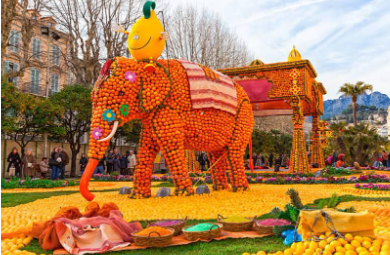
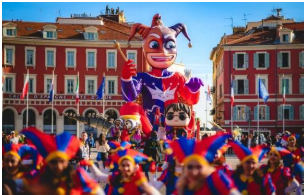
Above : Parade float during the Fête du citron in Menton
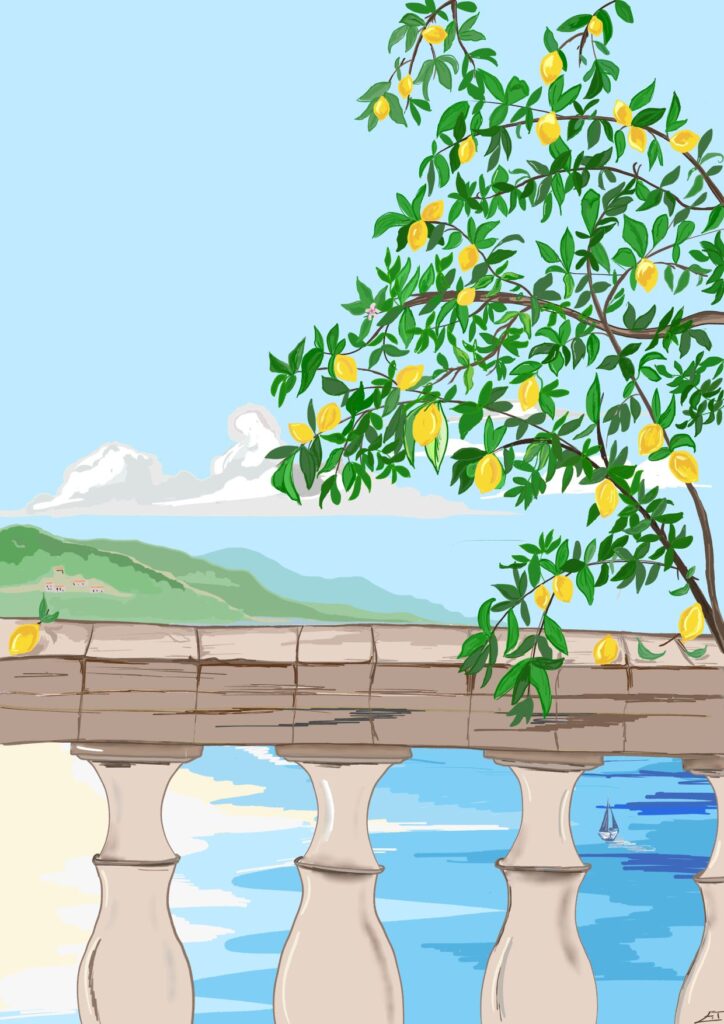
On the left : Illustration drawn by our illustrator Emilie T.
Forget the winter blues; while most of France is shivering under gray skies, the South is getting ready for a massive celebration. The Fête du Citron in Menton and the Carnaval de Nice are the highlights of the season, turning the Côte d’Azur into a vibrant, sun-drenched playground during the month of February.
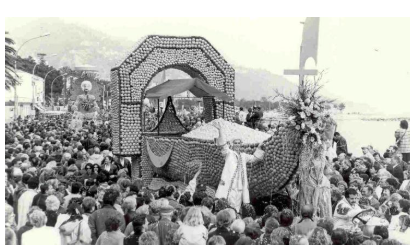
The Fête du Citron started in 1895 as a small celebration organized by a group of hoteliers with the goal of bringing activity to the city during the winter. While the lemon had been a local staple for centuries, the Fête du Citron was officially created in 1934.
The carnival program has always been very busy; people could play games like Moucouleti. During the parades, locals would carry small candles and try to blow out their neighbors’ flame while keeping theirs lit. The biggest event is, of course, the parade with its wonderfully decorated floats.
Today, the carnival is a massive operation and has been recognized as part of France’s Intangible Cultural Heritage since 2019. Each year, local artisans use over 150 tons of citrus fruit, mostly oranges and lemons, to create giant sculptures and floats in the Biovès Gardens. With over 250,000 visitors annually, the event is a major economic boost, generating €64 million for the territory in 2024 alone.
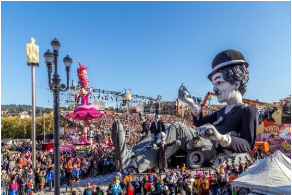
Just a short train ride away, the Carnaval de Nice takes center stage. Since its modern international form began around 1889, Nice has solidified its reputation as the « Winter Capital.” The program is packed with the energy of the Corsi Carnavalesques—huge, satirical floats parade through the streets both day and night—and Batailles de Fleurs (Flower Battles) take place on the iconic Promenade des Anglais, where costumed models on floats throw thousands of locally grown flowers, like mimosas and lilies, into the crowd.
Both carnivals are deeply rooted in the Mardi Gras (Fat Tuesday) tradition. Historically, this was the final chance to party and eat rich foods before the period of Lent (Carême), a time of fasting. By holding these events simultaneously, the region offers a « double feature » of culture that draws spectators from all over the world.