French cuisine is widely regarded as one of the most influential culinary traditions in the world. Cooking schools across the globe teach classic French recipes and techniques, often using them as a foundation for professional training. France also holds the largest number of Michelin stars of any country, a distinction rooted in the Michelin Guide itself, which originated in the country and has since become a global standard for evaluating restaurants. Even the term “restaurant” comes directly from French, and has been adopted by many other languages as is, reflecting this lasting influence.
More broadly, the codification of cuisine owes much to legendary figures like Marie-Antoine Carême and Auguste Escoffier, whose work helped structure and formalize modern culinary practices. For these reasons, UNESCO recognized the « gastronomic meal of the French » as an intangible cultural heritage in 2010.
Yet, in the past decades, American fast food has become more popular in France than any other type of cuisine. McDonald’s was first introduced to the country back in 1972; a very timid opening, a few years during which France stayed loyal to its adored Jambon-Beurre and Cassoulet. Then, came the 1980s, proving that even France was not immune to the American way of life.
⛦ A shift of demand in the taste market
To put it into perspective: 12.5 million hamburgers were eaten in 1980; that is more than two per second. McDonald’s then generated more than 75 million francs in revenue in 1981 alone, a trend that would keep on increasing year after year. Looking back on it, it feels almost cathartic to read McDonald’s market studies predicting an assured loss in France upon launch when here we are, 50 years later, the fourth country with the most McDonald’s locations in the world (which is to say 1,589). Worse yet: France also ranks third in fast food consumption out of all the major developed countries. About 1.46 billion burgers were enjoyed across France last year, a staggering hundredfold increase from the 1980s, and you can find burgers on the menu of about 85% of the country’s restaurants according to the World Economic Forum.
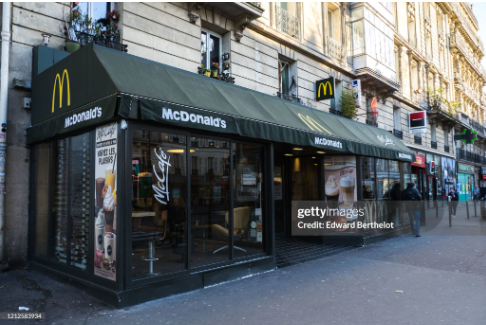
McDonald’s restaurant, in the 14th quarter of Paris, designed to resemble a traditional French café
But why is that? Surely not because of a lack of time: an important factor in the development of fast food in the US was the short timeframe people had to eat over there, generally not exceeding 30 minutes. France, on the other hand, takes much pride in enjoying some of the longest lunch breaks in the world: from 1 to 2 hours on a work day. Contrary to common belief, French cuisine does not lack the hearty qualities generally associated with fast food: no other country likes its butter quite like France does, and despite their classy reputation, most French meals are in fact quite copious, as they needed to fill the stomachs of toiling peasants first and foremost.
To answer such questions, one must look back in time to when American fast food chains were first introduced to France. There actually is a series of fascinating archives posted by the INA, dating back to the years 1979 to 1984, documenting the unexpected popularity of McDonald’s after its opening in France, all of which I linked in the sources. When asked why French people liked McDonald’s, some of them said it was because they liked how quick and convenient it was; others said it reminded them of the United States…Which people used to hold in much higher esteem during the 20th century than they do now. Many of them pointed out how cheap it was when compared to other local restaurants, making it more affordable for commoners in times of crisis. The large number of fast food outlets compared to more traditional restaurants, along with the growing popularity of delivery services like Uber Eats, also makes it the easiest option when deciding what to eat.
The truth is, when the concept of fast food reaches your taste buds, it becomes hard to truly forget it. We have evolved as a species to choose convenience when it is an option. In fact, the exact same process went into the invention of Bistrots in the first place: they appeared as a response to the increase in fast service demands and people wanting to eat more casual dishes. Perhaps the rise of fast food as a natural evolution of developed countries’ cuisine is inevitable, while Haute Cuisine, for whichFrance is so famous, is doomed to remain enjoyed by the elite only. Beyond that, I personally do not know of many French people who still eat Blanquette, Pot-au-feu or Bouillabaisse on a regular basis; these dishes seem to have grown an old flair to their names, mostly identified with an older generation. These slow-cooked, more expensive dishes that you need to sit down to enjoy have now been replaced by simpler plates of affordable haste.
⛦ French-style fast food
Reality is something else entirely: the emergence of American fast food in France has led to a rise of local fast food chains to try to compete against their Western invaders. Some of those include :
La Brioche Dorée: The self-proclaimed ‘first French fast food chain’ was specifically invented as a way to counter the hyper-industrialized fast food chains of the United States, by reinventing fast food with the quality and warmth of a French bakery. It is present in many other countries, such as the US, Qatar, China, and many of its European neighbours.
La Croissanterie: Invented in 1977, it is described as another French response to the American fast food craze, but it is also credited as one of the many inventors of frozen croissant dough, allowing for more efficient service. It possesses 265 stores worldwide; 20% of them outside of France.
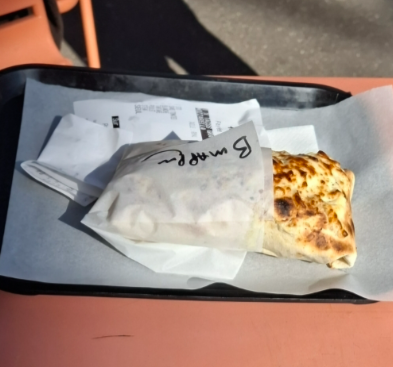
O’Tacos: The most recent entry here, it has gained widespread appeal in only a few years. O’Tacos is the leader in probably the most famous fast food to ever come out of France: French tacos, which were invented in Lyon only two decades ago. Combining meat, cheese, and fries stuffed in a wrap, it blends French and Maghrebi cuisine together in a burrito-wannabe. Gourmets call it an aberration, gourmands call it a masterpiece, and French people can’t get enough of it.
Tacos Français gratiné — photo prise le 20 mars à Lyon
Alongside many more, like Pokawa, Pomme de Pain, or Flunch, which are all very popular across the country. Even McDonald’s went through a complete rebranding in France: the beef used in their burgers now has to be of 100% French origin, and many burgers containing French cheese are now part of the menu. In truth, French cuisine did not simply fall behind: it evolved with its time to become something more appealing to its new audience, for better… Or for worse. As is to be expected, junk food causes serious health deterioration for its frequent consumers.
Despite its rich cuisine, France has historically been a comparatively healthy country. It ranks 149th out of 191 countries in obesity rates according to a WHO 2022 study; the lowest of any European country. According to the Culture Factor’s country comparison tool, which is largely based on Hofstede’s cultural dimensions theory, this is due to higher levels of parental control over a children’s behaviour and diet.
However, according to the OECD, levels of obesity in France are on the rise. Approximately 10% of people in France are obese, which is comparatively low, but almost 40% of adult men are overweight, and the OECD predicts a further 10% increase within the next decade. This can largely be traced back to the fact that today’s parents are far more accustomed to fast food habits than previous generations, making them more likely to allow their children to consume it regularly. Although the European Union has banned many harmful substances commonly found in fast food elsewhere in the world, diets remain unbalanced and may still lead to serious health issues.
In this new era of fast food, it seems the entire world is waging a losing battle against unhealthy diets that have become a staple of everyday life… and, contrary to past expectations, France is no exception to that rule.