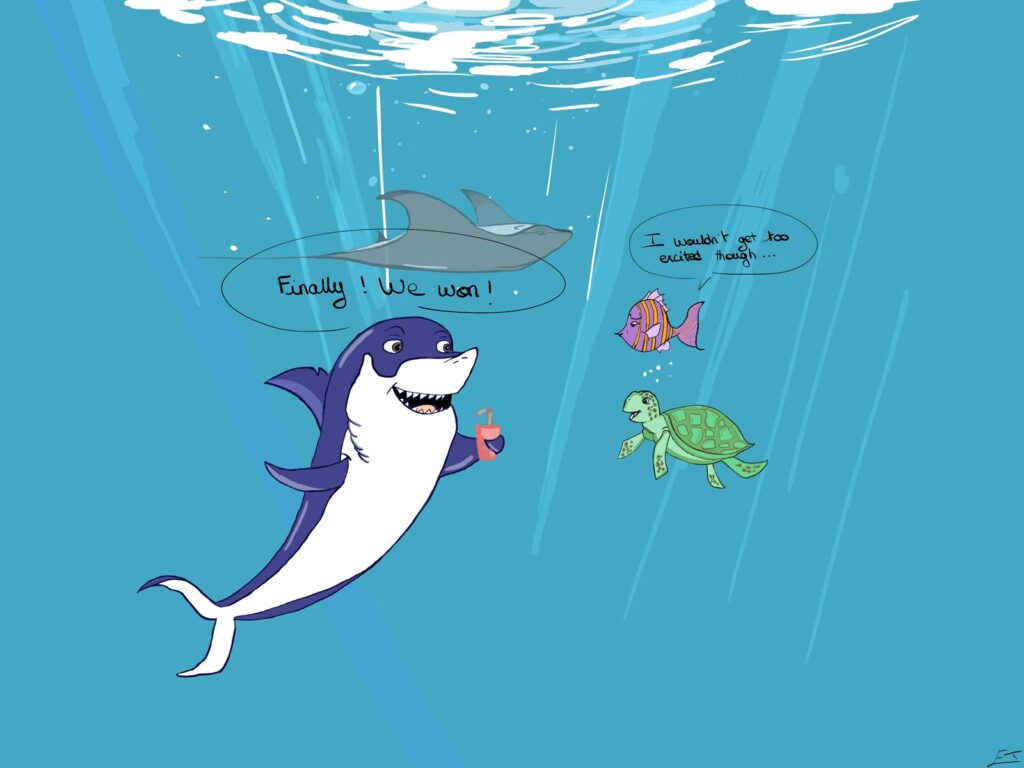
Illustration réalisée par Emilie, illustratrice du journal
While oceans are rising at an alarming rate and illegal, unregulated fishing remains a persistent global threat, which is itself compounded by the growing pressure of deep-sea mining projects in every major ocean, marine biodiversity is facing an unprecedented crisis. Coral bleaching events in places like the Great Barrier Reef, or the collapse of shark populations in the Atlantic, illustrate the scale of the damage. According to a report by the Society for the Conservation of Marine Biodiversity, 5,830 species of marine animals are now swimming on the edge of extinction.
Yet, amid these troubling developments, a glimmer of hope emerged. In June 2025, on the opening day of the United Nations Ocean Conference, Moetai Brotherson, President of French Polynesia since 12 May 2023, announced that 4.55 million square kilometres of ocean, known locally as Tainui Atea and encompassing almost the entirety of French Polynesia’s Exclusive Economic Zone (EEZ), would be designated as a Marine Protected Area (MPA) under a 15-year management plan. Paris, which co-hosted the conference, framed this commitment as part of France’s broader national objectives to safeguard its vast oceanic domain. This decision establishes the largest Marine Protected Area in the world, more than twice the size of what had previously been the largest MPA, the Marae Moana in the Cook Islands.
By definition, an MPA is a protected area of the world’s seas, oceans, or estuaries in which human activities are regulated or restricted to preserve local biodiversity. Within this immense protected zone, approximately 1.1 million square kilometres have been classified under IUCN categories I and II, meaning areas of maximum protection where all extractive activities and resource removal are strictly prohibited. The remainder of the zone will also remain protected, with only some eco-responsible activities allowed.
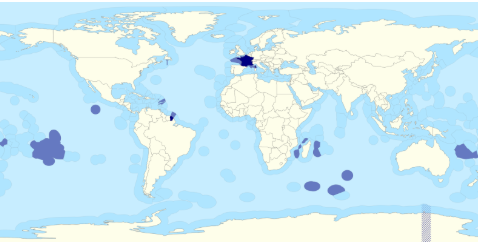
Map showing the EEZ of France (in dark blue)
One lesser-known piece of information is that France actually possesses the largest EEZ in the world, mostly due to its numerous overseas departments and territories scattered all over the oceans. In fact, in total, the total EEZ of France is roughly 11 million km2, which represents about 8% of the world’s exclusive economic zones, while the country’s land area represents only 0.45% of the world’s land area. This is especially why such a decision is shocking: nearly 45% of France’s total maritime space is now effectively closed to deep sea mining and bottom trawl fishing. At a time when maritime resources are becoming increasingly valuable and contested, it stands out as a rare act of restraint for the preservation of marine conservation.
This sanctuary provides refuge for exceptionally rich and fragile marine life, such as 176 coral species, 21 different species of sharks, many species of whales and dolphins, but also emblematic species like the green sea turtle (honu or tifai), or even the coconut crab (kaveu). It has for a long time been considered a tropical paradise, not just for its glorious landscapes but also for its rich biodiversity.
This is a decision tied with ancient traditions and respect for the ocean. A recent study found that 92% of French Polynesians support new marine protected areas, seeing them not only as a tool for conservation but as a way to honour cultural heritage and revive traditional management practices. President Moetai Brotherson described this bold step forward as a way to assert “our ecological sovereignty while creating biodiversity sanctuaries for our people and future generations.” He also assures that, to Polynesian people, the ocean isn’t just a vast pool of resources, but a respected “source of life, culture, and identity”.
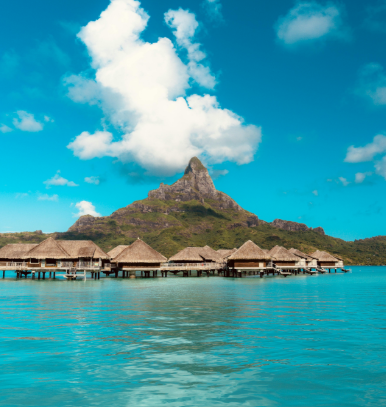
Bora Bora, an island in western Polynesia is renowned for its heavenly setting. It was notably used as the base for Operation Bobcat in WW2.
A Global Pledge for the Future
Globally, only 8.4% of ocean and coastal areas are under protection, according to the Protected Planet Report 2024. But the world has agreed, through the Kunming-Montreal Global Biodiversity Framework, to push that number to 30% by 2030; a call to action that French Polynesia is already leading. At the 2025 United Nations Ocean Conference, many other nations, including but not limited to Spain and the Solomon Islands, announced the creation of further protected areas under their territory, showing everyone the path for a truly sustainable planet.