A goûter, originally a verb used to mean “to taste”, is one of the sweetest parts of daily life in France. As soon as 4pm strikes, children all over the country stop their current activity to meet their small pleasure of the day: an intermediate meal to keep them going for the rest of the day.
A mid-afternoon snack is something that exists in many cultures where people can afford it. It is known in Spain as “la Merienda”, in Italy as “Merenda”, whereas the most renowned and most likely widespread one is the afternoon tea, enjoyed primarily in the United Kingdom, and in many other countries as well. There is, however, a crucial difference between British tea time and the French goûter, which relies on the way it is perceived in the collective mindset of the people. While tea is, in principle, a rather formal meal around which adults can gather and talk, a goûter is by nature alone aimed at a much younger audience, repulsed by tea and partial to sweets and pastries.
As a result, goûter inscribes itself in the mind of any French person as a nostalgic concept most adored. Coming home late from an eight-hour-long day of school, what else could your drowsy self do but eat? Homework can wait, hunger cannot. We have a saying in France that goes: “après l’effort, le réconfort” (after the effort, comfort), which applies to this situation very well. It’s a small compensation for the hard work that was provided during the day, and even a source of motivation for what is to come. I personally only have fond memories of this short time of the day, where I would come back home alone and enjoy an éclair à la vanille while watching snow falling down outside. Meanwhile, in summer, it becomes synonymous with holiday breaks. Goûters are organized for birthdays, simple friend gatherings, or even after-work events.
The target audience
This meal unavoidably tends to be most appreciated by the younger ones, which is to say, kids until 15 years old. That being said, while less common – and perhaps more taboo – the goûter is also a dish grown-ups enjoy, and quite frequently so even. According to cuisineAZ, about 50% of adults between 35 and 49 years of age claim to eat a goûter on a regular basis. While this number could sound surprising to some, in truth, there is nothing outlandish about stopping at a Boulangerie and picking up a small snack to enjoy on your way home from work, even if some will remain skeptical about mentioning it. And yet, some people even go so far as to attribute dietary qualities to afternoon snacks!
Possible health benefits
The idea of a midday snack having health benefits alone may sound ridiculous, but the question is legitimate. According to some diet experts, like Marie-Laure André, eating a small snack between lunch and dinner could help to evenly spread your calorie input throughout the day, and thus, reduce the amount you eat before nighttime. Of course, this implies you do reduce the amount that you eat at night, which is not always guaranteed. And eating a ton of sugar for goûter probably will not do you any good either.
What is a traditional goûter?
Traditionally, it consisted of nothing more than a slice of bread with butter and chocolate. This is what most grandparents would consider a respectable goûter, but the tradition has evolved along with its audience over time.
Today, it often consists of industrial cakes or biscuits, though it varies from person to person. A goûter in summer may be associated with the satisfying feeling of eating an ice cream under the burning sun, and in winter, with the comfort of a warm cup of hot chocolate.
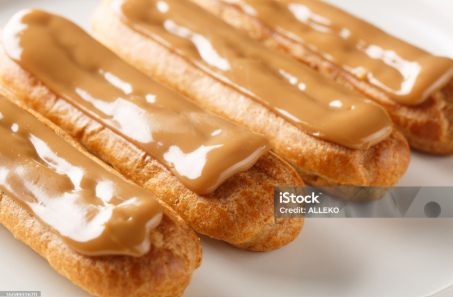
More elaborate treats are reserved for those who have the time to buy them from bakeries; these include, but are not limited to, éclairs, choux, or tartelettes of all kinds.
« Des éclairs », a French pastry
In truth, a goûter can consist of anything you feel like eating at the moment. There are as many options as there are people with different tastes—as long as it is eaten at four o’clock!