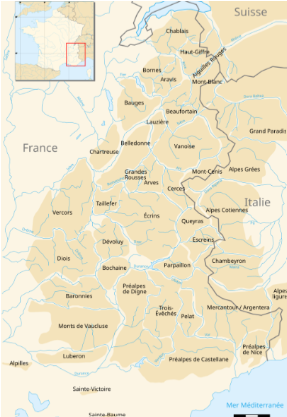
Nestled in eastern France, touching Italy and Switzerland, the French Alps stretch across several regions: Auvergne-Rhône-Alpes and Provence-Alpes-Côte d’Azur. It stands out as one of Europe’s most iconic natural treasures. Renowned for their dizzying peaks, glacier-carved valleys, and pure blue lakes, these mountains have attracted lovers of nature, mountain sports, and breathtaking views for centuries. The history of the Alps is closely linked to 19th-century alpine exploration, the rise of summer and then winter tourism, and the construction of villages and ski resorts that have transformed these wild landscapes into internationally beloved destinations. Today, they symbolize adventure, relaxation, and pure natural beauty.
Ski: an alpine heritage
When we think of the French Alps, the image that often comes to mind first is that of white slopes and world-renowned alpine ski areas. With around 350 ski resorts in France, the vast majority of which are located in the Alps, thus dominating the ski economy in Europe. France plays a major role in the popularity of skiing worldwide: it hosted the very first Winter Olympic Games in 1924, and will be the host of the 2030 Winter Olympics as well, hosting the event for the fourth time overall. It is also the inaugurator of the FIS Alpine Ski World Cup and one of the most visited places for skiing in the world.
Among the most popular destinations are:
Les 3 Vallées, also known as the largest interconnected ski area in the entire world, regroups 7 different ski areas, the major ones being Méribel, Courchevel and Val Thorens, namely the highest resort in Europe. It sells over 2 million skier-days thanks to its long season and high-quality snow, which attracts visitors from all over the world.
La Plagne — often cited as the most visited resort in France, with around 2.7 million skier-days per season, thanks to its vast domain and variety of sites, from family areas to challenging slopes.
Les Arcs, linked to La Plagne in the large Paradiski area, offers large famous off-piste terrains. It welcomes around 2.6 million skier-days, offering extensive skiing and spectacular views of Mont Blanc.
Alpe d’Huez also stands out with nearly 1.9 million skier days, famous for possessing La Sarenne, the longest ski slope in the world, stretching 16km total. Alpe d’Huez is also famous for its party life, as it hosts the Alps’ biggest music festival, Tomorrowland Winter.
Natural panoramas and hiking
Beyond the slopes, the French Alps offer breathtaking landscapes all year round. In summer, the mountains reveal their trails for hikers, cyclists, and amateurs alike. In particular, you can explore beautiful routes such as the Écrins National Park, which crosses wild valleys, glacial lakes, and flower-filled mountain pastures, illustrating the diversity and ecological richness of the massif.
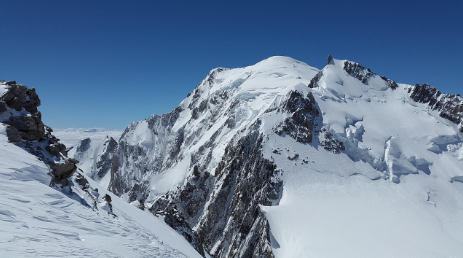
The Alps also host Mont Blanc, the tall mountain cut in half by the Italian border, which you can see from many viewpoints in all of Auvergne-Rhône-Alpes. It is a true reference for all hikers, and a source of admiration for many others.
Picture of Mont Blanc, in all its splendor
Iconic towns and cultural heritage
Finally, visiting the Alps isn’t just about admiring snow-covered peaks; it’s also about immersing yourself in exceptional towns and villages that embody the spirit of the mountains. Places like Chamonix, at the foot of Mont Blanc, attract visitors all year round for climbing, paragliding (which was partially invented in Haute-Savoie), or simply strolling through its historic streets. Other Alpine towns such as Annecy offer a different experience where nature and heritage come together.
Savoie is a region rich in history and culture, spanning over three different countries. Visiting is guaranteed to be an experience worth remembering!