By the 15th century, Gothic architecture was at an all time popular height in Europe. This was particularly the case in France, its birthplace. Mostly recognisable for its tall, vertical buildings with pointed arches and complex designs, the most famous buildings of which include the Strasbourg Cathedral or the Canterbury Cathedral, just to name a few. It is a style rich in history and even revolutionary at its time, as its design made it possible to build grand halls without the need to rely on the use of central pillars to hold the ceiling. And while this allowed the buildings to be quite majestic, they often ended up so complex that builders joked the style required as much prayer as stone to keep standing.
It was at this time that Italy, and more specifically the city of Florence, wary of the tiring Gothic architecture, started looking back in the past at a style long grown out of fashion, the classical style of ancient Greece and the Roman empire, and sought to bring back this ‘golden age of culture’ through a modern and more technically-advanced lens. Soon, symmetry, proportion, and geometry through the use of domes and stylistic pillars became the hottest thing around in all of Italy. When the French King Charles VIII invaded Italy in 1494, he was left speechless by the beauty of it all, and did not hesitate to bring home many Italian painters and architects such as Fra Giocondo or Domenico da Cortona, who will later on help him and his successor to the throne, François 1er, bring about the dawn of a new architectural age in France.
Legend has it that, in 1539, it is the same François Ier who, fully aware of his rival and both Spanish king and Holy Roman emperor, Charles V’s superior power and influence in Europe at the time, sought to impress the man not with military might but with pure artistic awe. After a delightful trip to the castles of Amboise and Chenonceau (both of which you can still visit today), François took great pride in showing his old enemy his most recent pride and construction, the castle of Chambord, seemingly designed by both Domenico da Cortona and Leonardo da Vinci himself. Masking this long-planned meeting as improvised, he succeeded in his plan by shocking Charles in every way. As he made his way back home, records have the latter confess to his sister to have “never seen anything more beautiful than this palace rising from the depths of the woods.”
A few centuries later, as protestantism rose and divided Europe, the catholic church would forcefully evolve Renaissance architecture into Baroque, a style yet-more bombastic and rich-looking even. However, by that time, Renaissance buildings had already spread to the entirety of Europe and even as far as their old colonies in America, leaving behind an unforgettable legacy for us to feast our eyes upon now just as well as they used to hundreds of years ago.
Where to find such architecture today ?
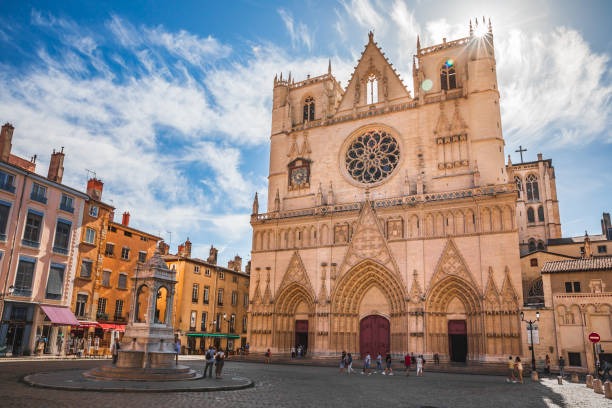
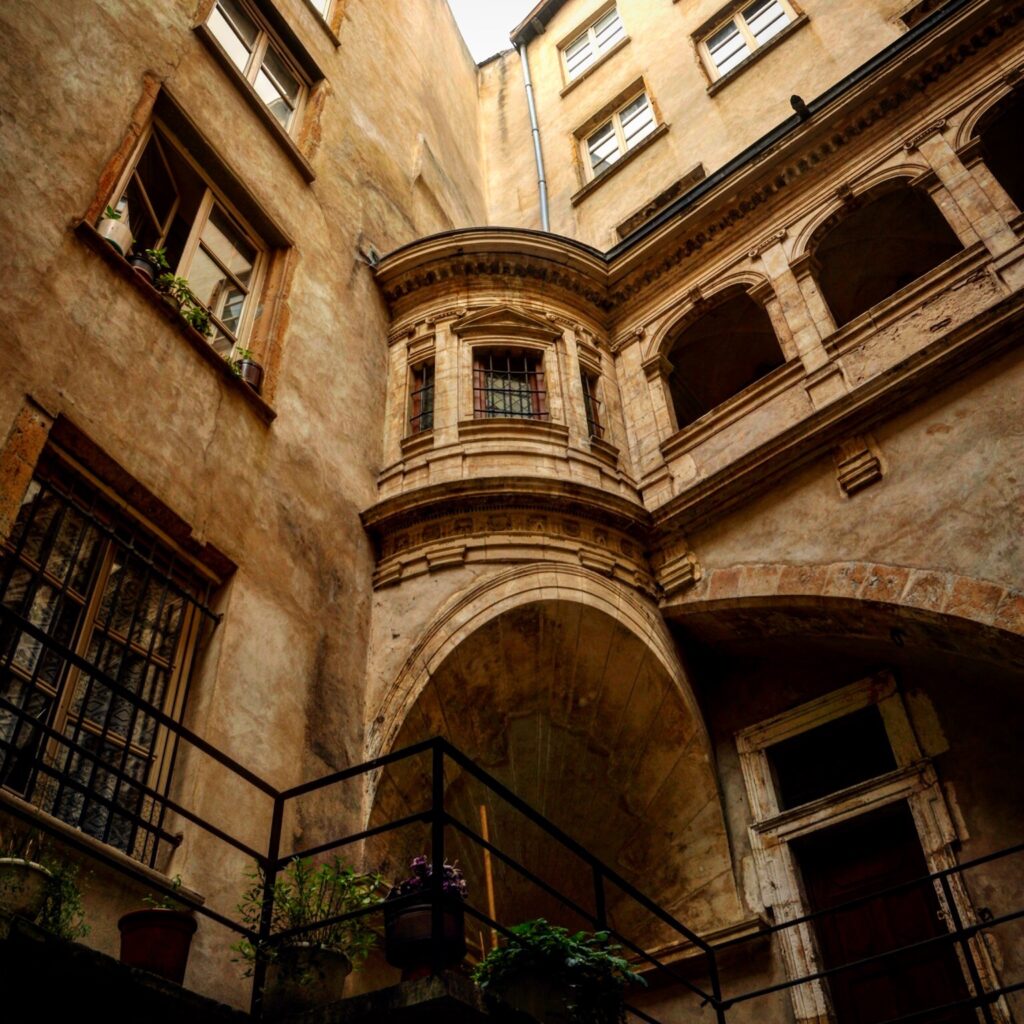
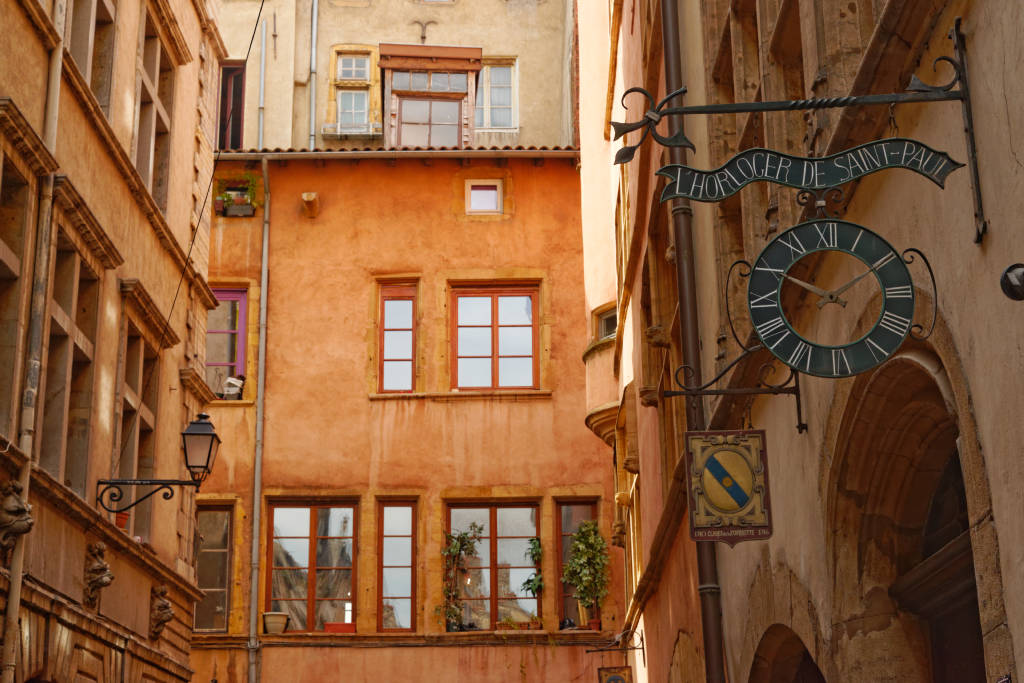
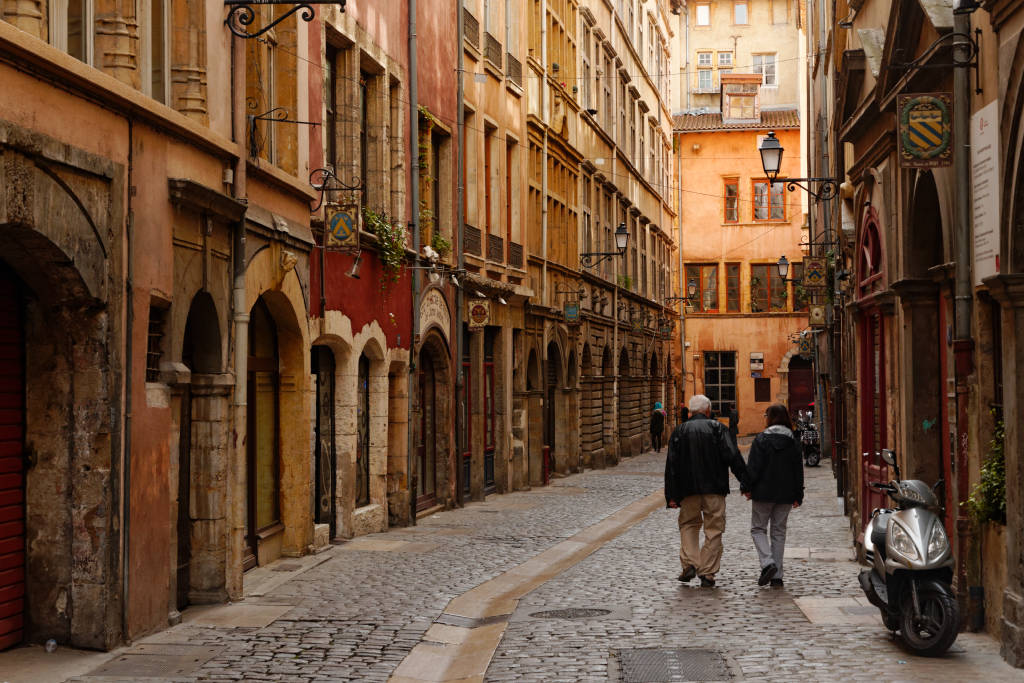
If you’re looking for a trip to the past in a classic Renaissance street, then no need for you to look very far! You’ve got one right around the corner. Le Vieux Lyon is the city’s Renaissance and medieval district, and earns its place as one of the most influential parts of the city ever since its nomination as a UNESCO world heritage site in 1998. It remains to this day one of Europe’s most extensive Renaissance neighbourhoods…
Though certainly not its only one.
Europe boasts other places where the Renaissance spirit still persists as the stone-made spine of the cities. Beyond its cradle in Florence, Italy brims with its splendour, such as in Venezia, which carries its own flair, where shimmering palazzi along the Grand Canal showcase the city’s unique fusion of Gothic and Renaissance. Spain under Charles V was quick to adapt following its enlightening Europe tour, reflected in sites like Salamanca, fittingly nicknamed ‘the golden city’. Up north, Prague, the Prague Castle as well as many more reveal how the Renaissance left its mark even at the edges of Europe’s cultural heart. While beyond Europe, the shadow of Europe continues to linger on their old colonies through the presence of buildings from a time long gone, such as is the case for the Cathedral of Lima in Peru, once the Spanish viceroyal capital.
SOURCES
Characteristics of Renaissance Architecture | ArchitectureCourses.or
Quand le roi François Ier veut éblouir l’empereur Charles Quint avec Chambord
Rois et reines de France : François 1er — 2000 ans d’histoire — Apple Podcasts
Marx and Engels On Literature and Art Preface.
The Complete Guide to Vieux Lyon (Lyon’s Old Town), France
Historic Site of Lyon – UNESCO World Heritage Centre