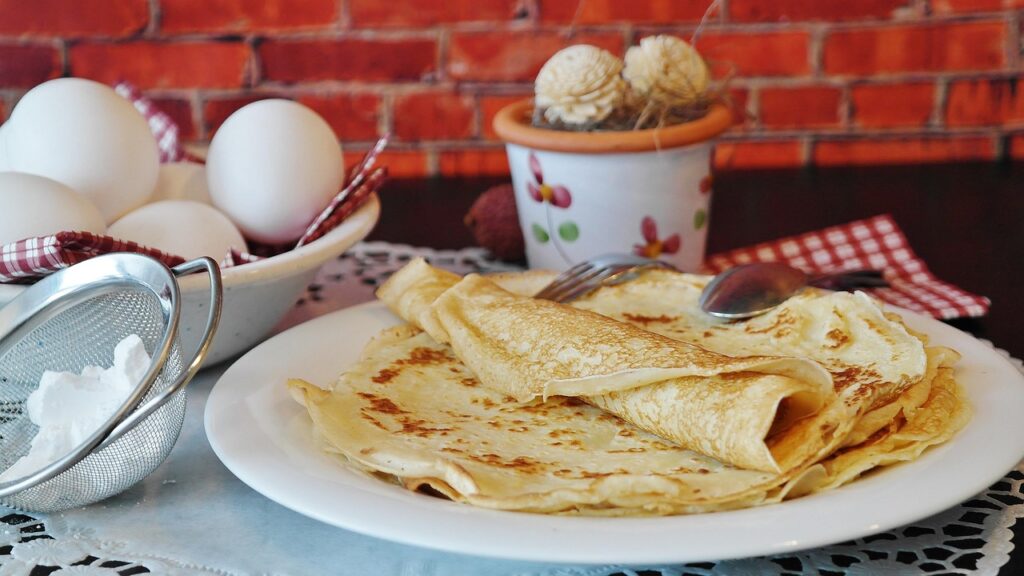
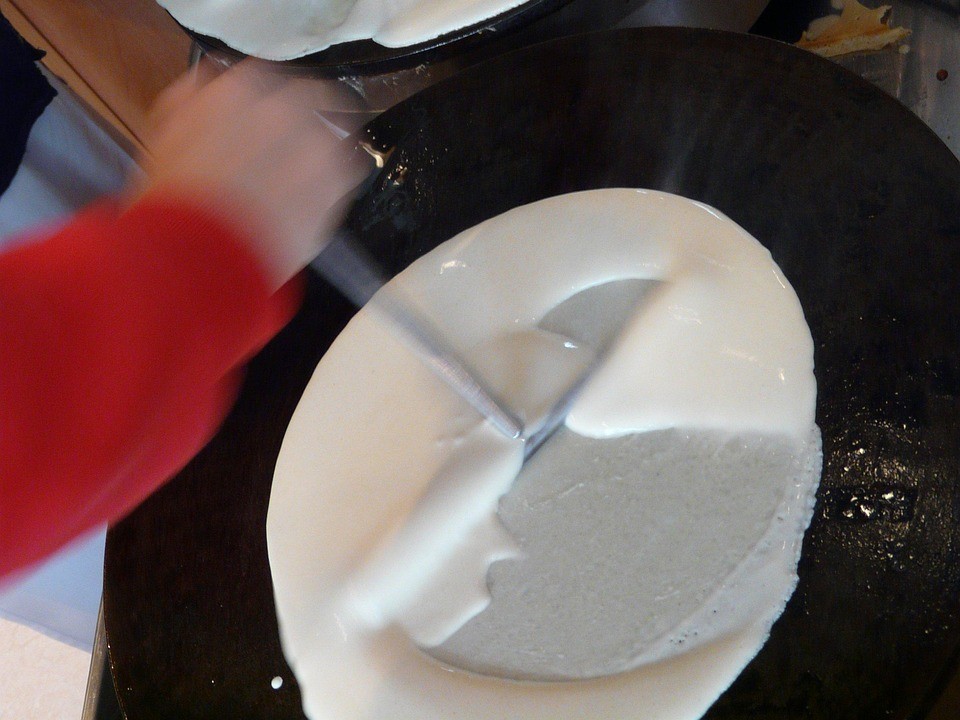
Everyone loves crêpes. So much so that there exists a version of them in almost every cuisine. From Venezuelan cachapas to Dutch poffertjes and American pancakes, it is the simplicity of baking such a delicious dish that allows it its renowned fame. French crêpes stand out by how thin they are, as well as with the unique way of cooking them, which includes flipping them; a fancy word to denote the way they are tossed in the air like the rising sun it is said to celebrate.
But, if by chance you have been roaming the streets lately, you may notice the overabundance of them in the streets. This is no coincidence, as this time of year marks the period of La Chandeleur, when crêpes take center stage in restaurants, cafés, and homes all across the country.
History of the event
In ancient Israel, according to the law of Moses, every firstborn boy had to be taken by his parents to the temple in Jerusalem forty days after his birth in order to consecrate him to God. La Chandeleur, or Candlemas, celebrated every February 2, commemorates the biblical episode of Jesus’ presentation at the temple. It marks the last episode in the nativity cycle, formally ending the period of Christmas forty days after Christmas eve (Biblically speaking, the number forty often represents a time of preparation) and announcing the arrival of Spring. In fact, due to the universal reach of the event, there existed, before the Christians even existed, many pagan and local beliefs commemorating this day as well.
Les fêtes de l’Ours du Haut-Vallespir is a festival in the Pyrénées-Orientales region of France where people dress up as bears to commemorate the end of its seasonal hibernation. It is in no way dissimilar to Groundhog Day, celebrated in the USA at the same period. The Irish celebrate Imbolc, while ancient Romans celebrated the Lupercalia around that time. In fact, it is that festival which would go on to become the precursor of Candlemas.
The event was said to have fallen out of favor by the 5th century AD, when the feast was presumably restored by Pope Gelasius I, who wished to transform the pagan celebration into a Christian one. He organized torchlight processions in honor of the coming spring, arguing that the event did not have to remain pagan, as it was already linked to the idea of purification. It would later become associated with the Purification of Mary. All the candles in the city were lit and then taken to the church, which continued to use them for the remainder of the year, a tradition that would go on to survive the test of time.
Pope Gelasius I is said to have offered cakes and sweets to pilgrims, which is believed to be the origin of the tradition of making crêpes on Candlemas. The round shape of the crêpes was meant to symbolize the revived sun shining through the dawning sky, and therefore the return of light. This is why it is still customary for some families to keep the first crêpe made on that day on top of a cupboard.
The French variant
As is often the case with this country, the French took this traditional Christian holiday and… used it as an excuse to make lots of food. Over time, most people even came to forget about its religious connotations!
How could you blame them? Crêpes are delicious, after all. Making them together with your family for a special event is a process that is going to catch children’s attention much better than any history lecture. And so, over hundreds of years, the tradition left while the crêpes remained.
Crêpes hold a unique place in French cuisine. While most iconically French dishes are either from fine gastronomy or hearty meals invented by the countryside farmers, crêpes stand out as one of the few dishes that could be categorized as street food. They are extremely simple to make, do not require a plate nor utensils, and tend to be sold as a pick-and-go option; the kind that you eat on your way to somewhere else.
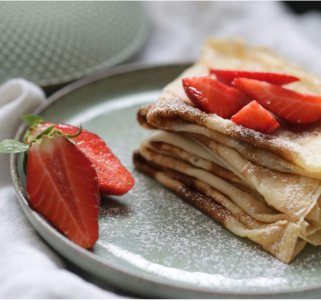
They can be either sugary or, in the case of galettes, salty as well. It’s a kind of crêpe made with buckwheat flour, which was introduced to the European Middle Ages by the Mongols (or, according to some historians, brought back from the Crusades in the Arab world), and remains extremely popular to this day, especially in the Brittany region. While sugar crêpes are eaten with chocolate, fruits, and powdered sugar, galettes are eaten with eggs, cheese, and many forms of meat.
Every excuse is good to take when it comes to eating delicious food, so don’t hesitate to make some of your own! Quick to prepare, simple in their ingredients, and endlessly customizable, they are, above all, abundantly comforting.